SaaS SEO Service

SaaS content writing that explains your product to the people who buy it

Articles, website pages, comparisons and case studies written for software buyers. We learn your product from your team, plan every piece around what your readers search for, and check the facts before anything goes live.

Content we write for SaaS companies

SEO articlesWebsite copyFeature pagesComparison pagesCase studiesThought leadershipProduct guidesTechnical contentGuides and reports

Why SaaS content is different

The content problems SaaS teams actually have

Writing for software buyers isn’t the same as writing for any business. These are the issues we see most often, and the ones good content has to solve.

A product that’s hard to explain

Your team lives in the details. Buyers need the problem, the outcome and how it works, in that order and in plain language.

Traffic that isn’t buyers

Broad articles bring visits from students and job seekers. The content that matters reaches people who could actually use your product.

Content that doesn’t match the product

Old features, renamed plans and outdated screenshots quietly erode trust with buyers who are evaluating you.

Several buyers, different knowledge

A developer, a team lead and a finance approver read the same page with very different questions.

Overlapping and outdated pages

Several posts on the same topic compete with each other, while older pieces slowly stop being accurate.

No time to publish consistently

Your experts are busy building and selling, so content keeps slipping down the list.

What we write

Content types, and when you need each one

Different content does different jobs. Few SaaS companies need all of these at once, so we help you pick the formats that match your buyers and your goals.

Buyer stageAwarenessConsiderationDecisionAdoptionRetention

SEO articles and guides

AwarenessConsideration

Answer the questions people search for while they research a problem, and link them to the product pages that help.

You need it when
You want qualified people to find you before they know your product exists.
What we need from you
Topics your customers ask about, and a contact who can check the facts.
How to judge it
Engaged visits and sign ups or demos influenced by the article

Website copywriting

ConsiderationDecision

Homepage, product, feature, solution, industry, integration and pricing pages that explain who the product is for and why it fits.

You need it when
Your site describes features but not outcomes, or speaks to everyone at once.
What we need from you
Positioning, customer interviews or sales notes, and product access.
How to judge it
Conversion rate on the page and the quality of leads it brings

Comparison and alternative pages

Decision

Fair, current comparisons for buyers weighing their options, with clear criteria and no invented claims about other products.

You need it when
Buyers are comparing you with named tools and you have no page that helps them decide.
What we need from you
Your honest view of where you’re stronger and weaker.
How to judge it
Demo requests and trials from these pages

Case studies and customer stories

Decision

The customer’s starting point, what they set up, and the results they can verify, approved by them before publishing.

You need it when
Sales keeps asking for proof from customers like the prospect.
What we need from you
A willing customer, an interview slot and their approval.
How to judge it
How often sales uses them, and conversions on pages that include them

Thought leadership

AwarenessConsideration

Your team’s informed view on a problem in your category, built on their experience, your data or original research.

You need it when
You have real expertise inside the company that never gets written down.
What we need from you
Time with the person whose view it is.
How to judge it
Shares, mentions, links and how prospects respond in sales calls

Product and feature content

ConsiderationAdoptionRetention

Tutorials, workflow guides and feature articles that show how the product solves a specific job.

You need it when
Buyers evaluating the product, or new users, can’t see how to get value from it.
What we need from you
Product access and a product contact for questions.
How to judge it
Use of the features covered and fewer repeat support questions

Technical content

AwarenessConsiderationAdoption

Content for developers and technical buyers, written from your docs, demos and engineer interviews, then reviewed by your experts.

You need it when
Your buyers or users are technical and generic writing doesn’t earn their trust.
What we need from you
Docs, a technical reviewer and sample code where relevant.
How to judge it
Engagement from technical readers and reviewer approval rates

Guides, reports and checklists

AwarenessConsideration

Longer resources people are happy to save or share, often used to start a conversation with sales.

You need it when
You need a useful reason for buyers to stay in touch before they’re ready to talk.
What we need from you
A clear topic, and any data you can share.
How to judge it
Downloads, and the share of those leads who later talk to sales

Accuracy

How we learn a product we didn’t build

The biggest worry with outside writers is that they don’t understand the product. We close that gap with your team’s input before writing, and their review before publishing.

We checkFacts, sources, product claims and that the piece answers the reader’s question.
Your expert confirmsAnything technical or product specific, before it goes live.
  • Product access

    A demo, a trial account or a walkthrough, so we write about what the product really does.

  • Expert interviews

    Short calls with the people who know the topic best, from founders to engineers to customer success.

  • Customer language

    Sales and support calls, reviews and tickets show the words buyers actually use.

  • Your documents

    Positioning, docs, past content and release notes, so we stay consistent with what you already say.

  • Voice guide

    Your tone, terms to use and avoid, and examples you like, agreed before the first draft.

How it works

From first call to published piece

You work with one lead throughout. Each step has a clear output, and you see and approve the brief before any writing starts.

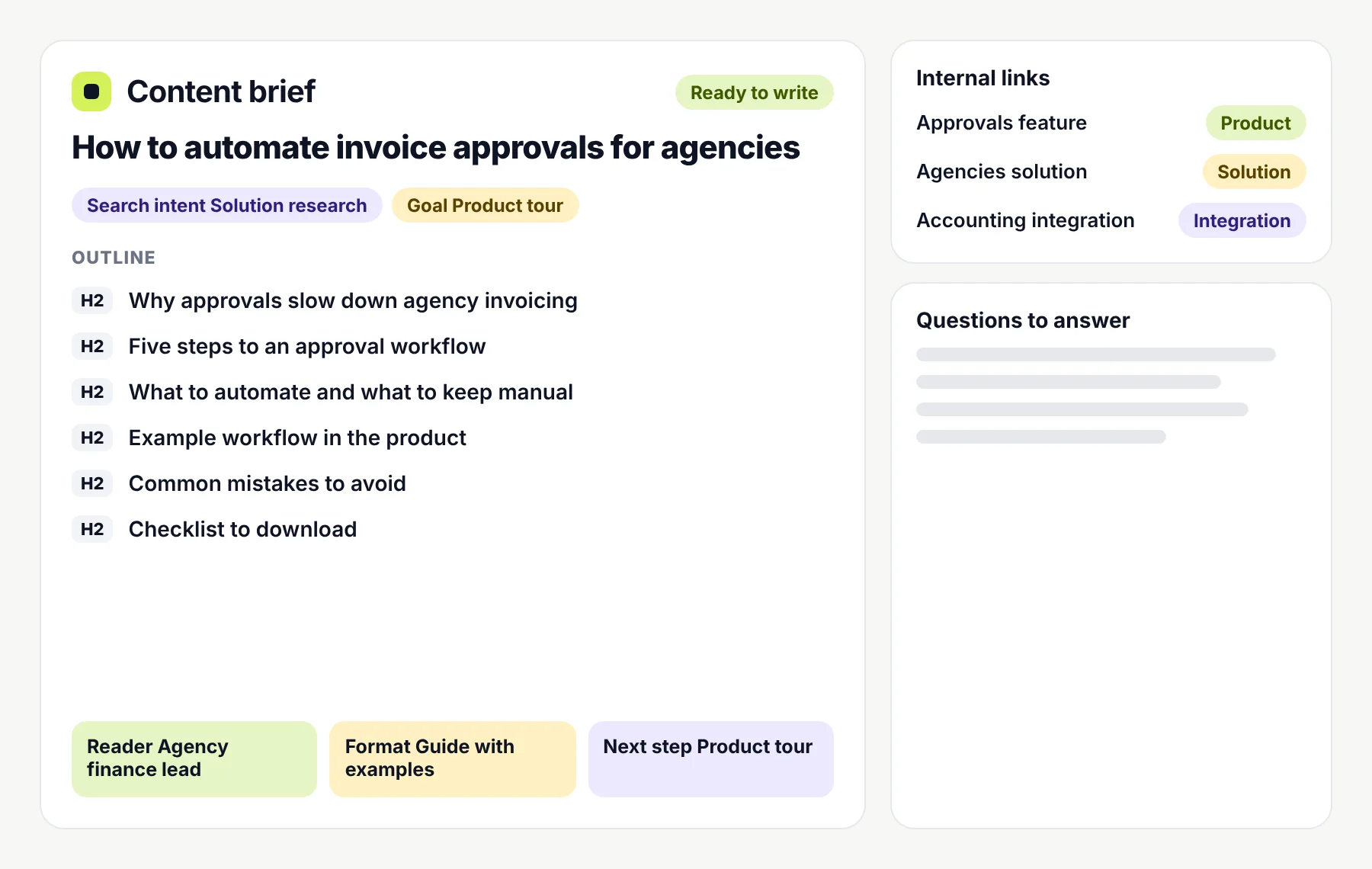
An example content brief showing the title, search intent and goal tags, an outline of headings, suggested internal links to product, solution and integration pages, and notes on the reader, format and next step
What a content brief looks like
  1. 1

    Discovery

    Your product, buyers, positioning, competitors and what content you already have.

    From youProduct access and a kickoff callYou getNotes on audience and voice
  2. 2

    Topic and intent research

    What your buyers search for and ask about, and what each search is really looking for.

    From youSales and support insights if availableYou getTopic list with intent
  3. 3

    Plan and priorities

    Which pieces to write first, which existing pages to update, and which to merge.

    From youYour goals and approvalYou getContent plan
  4. 4

    Brief

    Reader, search intent, angle, outline, sources, internal links and the next step for the reader.

    From youApproval of the briefYou getContent brief
  5. 5

    Research and expert input

    Source research, product testing and short interviews with your experts.

    From youTime with an expertYou getSource notes
  6. 6

    Writing and editing

    A draft written for the reader, then a separate edit for clarity, accuracy and voice.

    You getEdited draft
  7. 7

    Search optimisation

    Headings, terms used naturally, title tag, meta description and internal links.

    You getMetadata and link suggestions
  8. 8

    Your review

    Your team checks facts and voice, and we make the revisions agreed in your scope.

    From youFeedback in one placeYou getFinal version
  9. 9

    Publish and review

    Ready to publish files, and a later look at how the piece is doing and what to update.

    From youCMS access if we’re publishingYou getPublish ready document and review notes

Quality and SEO

What good content means here

Quality is easy to claim and hard to define. These are the standards every piece is checked against. There’s no magic word count or keyword density, so we write as much as the topic needs.

Matches the search

The piece gives the reader what their search was really after, whether that’s a definition, a how to or a comparison.

Accurate

Product claims are confirmed by your team, and statistics come with a source.

Says something new

Examples, opinions and data from your team, not a rewrite of the top ten results.

Easy to scan

Clear headings, short paragraphs and the answer near the top.

Sounds like you

Written to your voice guide and terminology.

Kept current

Updated when the product, pricing or market changes.

How we use AI tools

AI can make research faster, but it also makes confident mistakes. People stay responsible for every sentence we deliver.

We may use it to
  • Help with research, outlines and finding gaps
  • Speed up summaries of long source material
  • Suggest alternative headlines to test
We never let it
  • Publish anything without a writer and editor owning it
  • Invent facts, quotes, statistics or customer results
  • Mass produce near identical pages to chase keywords

Measuring usefulness

Judge each piece by its job

Not every article should produce leads, and page views alone say little. We agree what each type of content is for, then look at the signals that match that job.

Content works alongside your product, pricing, sales team and other channels, so no piece can promise rankings, leads or revenue on its own. What we can do is make each one useful, accurate and easy to find.

Content typeUseful signals
SEO articlesSearch visibility for the topic, engaged visits, and sign ups or demos the article helped with
Website pagesConversion rate and the quality of leads from the page
Comparison pagesDemo requests and trials started from the page
Case studiesHow often sales shares them, and their effect on pages that feature them
Product contentUse of the features covered and fewer repeat support questions
Thought leadershipMentions, links and what prospects say about it on calls


Choosing content support

Which kind of help fits you?

An agency isn’t always the right answer. Here’s an honest view of when each option works best.

A freelance writer

One strong writer for a defined set of pieces.

Works best when
  • You already have a strategy and an editor
  • Volume is low and topics are narrow

An in house content team

Writers who sit inside your company.

Works best when
  • Content is a core channel with steady volume
  • You can hire and manage writers and editors

A specialist SaaS partner

Strategy, writing, editing and SEO in one team, with design and development close by.

Works best when
  • You need planning as well as writing
  • Content should connect to SEO, pages and conversion

Ways to work with us

Strategy and writingA content plan, then the pieces in itWriting onlyBriefs and pieces for a plan you already haveRefreshUpdating and merging existing content

Our work

Search results from our client projects

These projects show how we grow organic search for SaaS products. Client names are withheld, and we’re happy to talk through the details on a call.
All Case Studies →
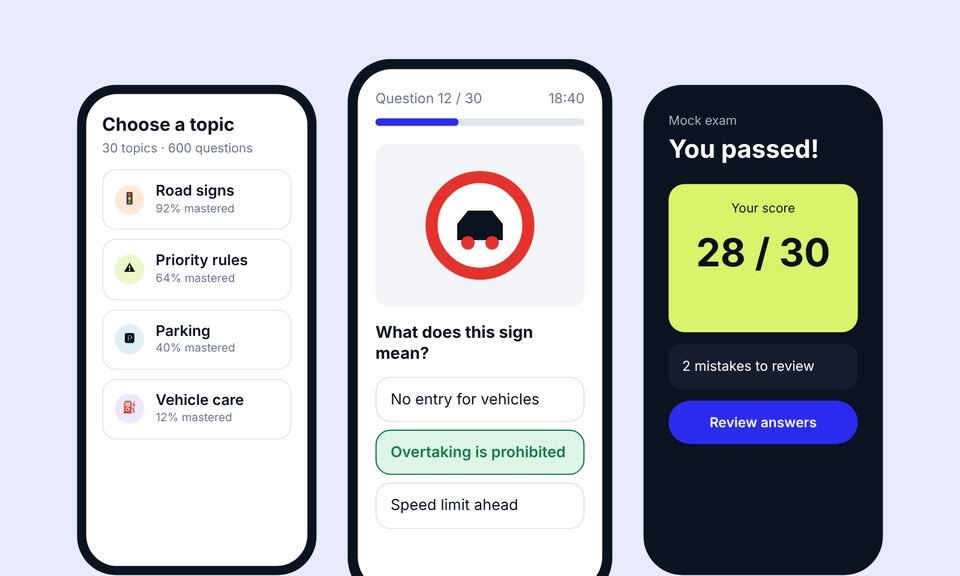
Three screens of a driving theory learning app: topics list, a road sign quiz question and a passed mock exam
Case 01
Learning app · Italy

EdTech SaaS

We designed the product, built the app and the website, then grew it with advanced SEO (including AEO and GEO) and Google Ads.

Design Development SEO PPC
SaaS

+38%

quiz completion

SaaS

1.8s

average page load

SEO

~20,000

organic visits a month, from a new domain

Read case study →
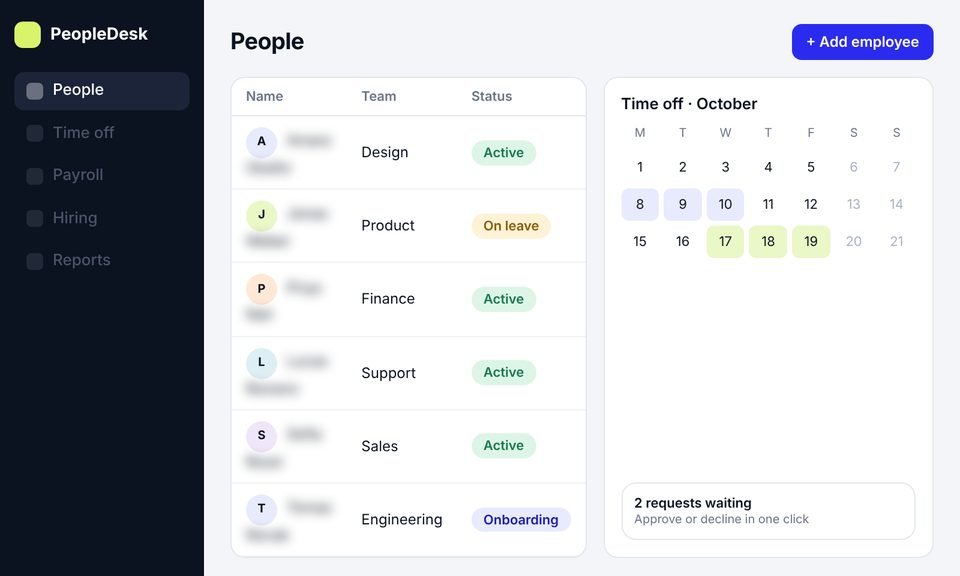
An HR management web app showing a people table with a time-off calendar
Case 02
HR platform · Idea to launch

HR SaaS Case Study

We took an HR platform from idea to launch: product design, development and a new website, then SEO to bring in users.

Design Development SEO
SaaS

+45%

trial signups

SaaS

−40%

HR admin time

SEO

~11,000

organic visits a month, from search

Read case study →
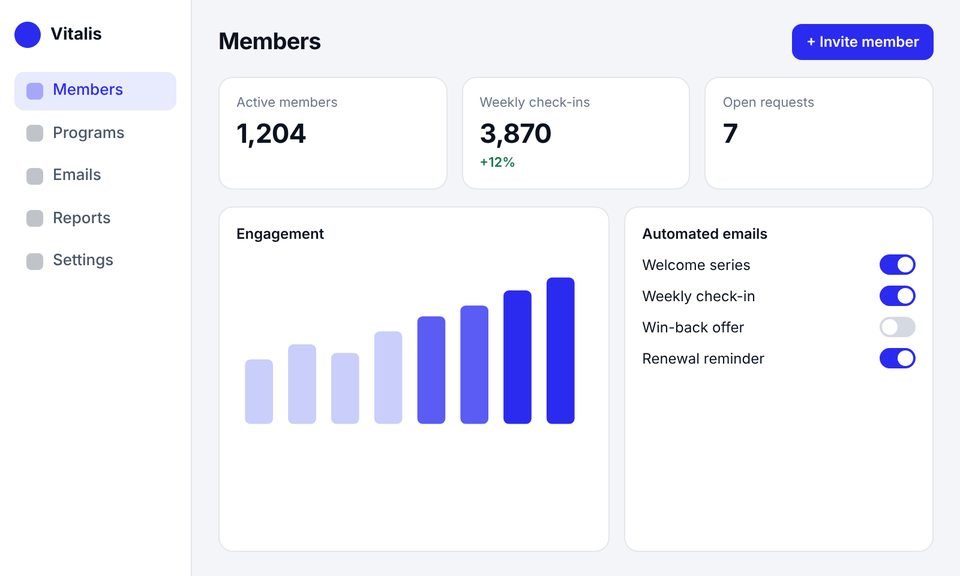
A wellness platform admin dashboard with member numbers, an engagement chart and automated email settings
Case 03
Wellness platform · New Zealand

Healthcare SaaS Case Study

This client had outgrown their website builder. We rebuilt it as a SaaS platform with an admin dashboard, automated emails and a new website.

Design Development SEO
SaaS

+40%

member engagement

SaaS

−30%

admin work

SaaS

50%

faster page loads

Read case study →

Testimonials

In their own words

Client names are withheld. Each quote comes from a real client and is shown with their company type only.

[Paste the client's own words here. A short, specific story about what changed after launch.]
B2B SaaS companyDesign, development and SEO client Design, development and SEO Read the case study →
[Paste the client's own words here. One or two plain sentences.]
Design, development and SEOHR software companyDesign, development and SEO client
[Paste the client's own words here. One or two plain sentences.]
Design, development, SEO and PPCLearning app companyDesign, development, SEO and PPC client
[Paste the client's own words here. One or two plain sentences.]
Design, development and SEOWellness platformDesign, development and SEO client

Services

Other SaaS SEO services

This page covers content writing. These services help the content get found and keep your search traffic safe.

01

SaaS SEO Services

SEO for SaaS companies, from keyword strategy and technical SEO to comparison pages and reporting tied to sign ups and demos.

  • Strategy built around search intent
  • Technical, on page and content work
  • Reporting beyond traffic
See More →
An AI overview in search results citing yourproduct.com, next to an AI assistant recommending the product, above a table tracking priority questions SaaS SEO
02

SaaS SEO Migration

Move to a new site, domain or platform without losing the rankings and traffic you’ve built.

  • Full URL inventory and redirect map
  • Checks before, during and after launch
  • Search Console monitoring after the move
See More →
A redirect map listing old and new URLs with 301 codes and checked statuses, above before launch, launch day and after launch steps SEO migration
03

Enterprise SaaS SEO

SEO for large SaaS sites with thousands of pages, several teams and complex technical setups.

  • Crawl and index management at scale
  • Templates and governance across teams
  • Technical SEO alongside your engineers
See More →
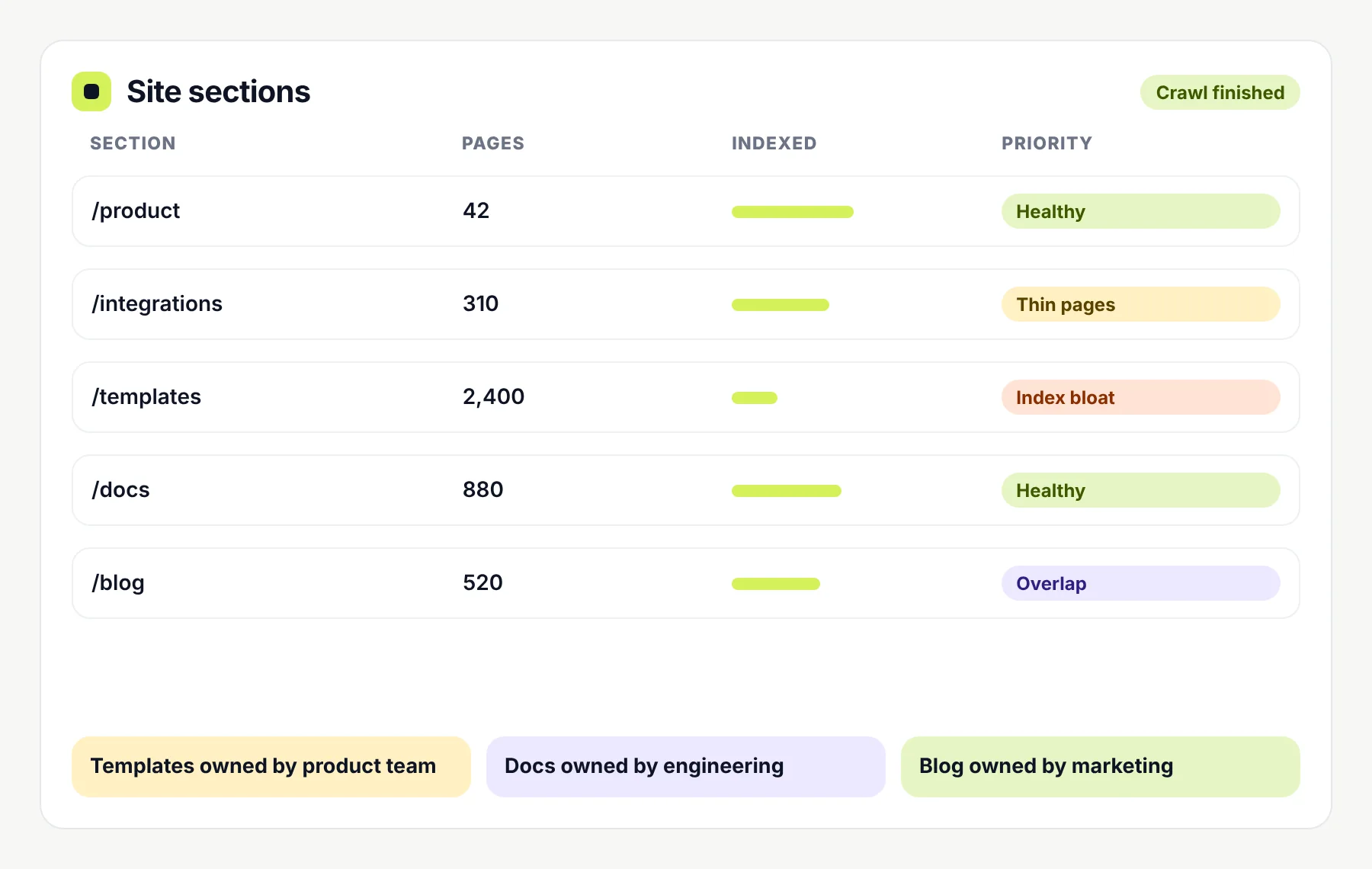
A site sections report listing page counts, indexing levels and priorities such as thin pages and index bloat, with ownership by team Enterprise SEO
04

AEO for SaaS

Answer Engine Optimisation helps your product be understood and cited when people ask direct questions.

  • Clear answers on key pages
  • Structured, scannable content
  • Visibility checks across answer features
See More →
A search answer box explaining how agencies automate invoice approvals in three steps, citing yourproduct.com among its sources AEO
05

GEO for SaaS

Generative Engine Optimisation looks at how AI assistants describe and recommend tools in your category.

  • Checks on how assistants describe you
  • Consistent product facts across the web
  • Content that supports recommendations
See More →
An AI assistant suggesting invoicing tools for agencies with the example product listed first, next to a panel showing where the product is mentioned or cited GEO

FAQ

Questions about SaaS content writing

Still have a question? Book a free call and ask us directly.

We learn it from you. Product access, short interviews with your experts and your sales and support material come before any writing, and your team reviews product claims before anything is published.

Let’s write for your buyers

Book a call and tell us about your product, your readers and the content you have today. We’ll suggest where to start and what kind of support makes sense.

What happens next

  1. 1You pick a time for a call.
  2. 2Share your site, a few pieces you like and any content plans you have.
  3. 3We suggest a starting plan, then send a written scope and price.