 Figma
 Google Ads
1Prospecting
- Audience
- Your customer profile roles at target company types
- Offer
- A guide, report or webinar
- Format
- Document or single image ads
- Destination
- Lead gen form
- Judge it on
- Cost per qualified lead
 Ahrefs
Semrush
 Search Console
Paid campaigns on LinkedIn that reach buyers by role, seniority, industry and company, with offers that suit where they are in the decision. We plan, launch and manage campaigns, connect them to your CRM where possible, and judge them on qualified leads and pipeline, not likes and clicks.
Is it right for you?
LinkedIn is strongest when you can describe your buyer by their job and company. It reaches people who aren’t searching yet, so it suits considered B2B purchases more than quick self serve sign ups. Whether it fits depends on your customer profile, deal size, sales cycle and budget.
What usually goes wrong
Most disappointing LinkedIn campaigns fail on fundamentals, not on settings. These are the issues we look for first.
Ultra precise targeting can stop campaigns from delivering, while broad targeting spends on people who will never buy.
Easy forms bring contacts, not always customers. Lead quality has to be checked, not assumed.
Asking a cold audience to book a demo often fails. Some audiences need something useful first.
The same small audience sees the same ads repeatedly, and response drops.
Results show up in pipeline weeks or months later, which makes quick judgements misleading.
LinkedIn, analytics and CRM each tell a different story when they aren’t linked.
Strategy
A campaign only works when the audience, offer, creative and destination fit together. We plan them as one chain, built from your product, customer profile, sales cycle, deal size and budget, rather than a template.
Who buys, at which companies, in which markets
How to reach them on LinkedIn at a workable size
What’s worth their attention at this stage
The message and format that carries the offer
Lead gen form or landing page
What counts as success and where it’s recorded
Audience targeting
LinkedIn lets you target by job, company and your own lists. Every narrowing step costs reach. Matched audiences and ad sets need at least 300 members to run, and tightly targeted audiences can get expensive or stall. We balance precision against scale for each campaign.
Account based marketing
When you already know which companies you want, LinkedIn can show ads to people who work there. B2B software is rarely bought by one person, so we plan for the group that decides, not a single contact. List match rates vary, and small lists may not reach LinkedIn’s audience minimum.
Agree target companies with sales, from your CRM and best customers, and group them by priority.
Add the list in Campaign Manager and check how many companies matched. Audiences need at least 300 members to run.
Layer in the roles that shape the decision, each with its own message.
Top priority accounts get specific content. Broader tiers get messages about the problem and category.
Report which accounts engage so sales can follow up while interest is fresh, as far as your data allows.
Example buying group for invoice approval software
Needs to hear aboutCost, risk and return
Needs to hear aboutHow it fixes the daily problem
Needs to hear aboutEase of use and time saved
Needs to hear aboutSecurity, access and integrations
Each role can be reached with its own ad set, as long as each one is big enough to deliver.
Objectives and ad formats
LinkedIn optimises toward the objective you choose, so the objective has to match the goal. Formats are chosen for the offer and the assets you have, and availability can vary by market and account.
Simple offers and clear messages, the usual first test
Showing the product or a customer story
Guides and reports people can read in the feed
Several features or use cases in one ad
Promoting posts from your founders or experts
Direct invitations, where available in your market
Webinars and LinkedIn events
Pre filled forms inside LinkedIn, used with several formats
Ad copy and creative briefs are part of the service. Design and video production depend on your scope and the assets you already have.
Lead generation
Most LinkedIn audiences aren’t ready for a demo when they first see your ad. Some campaigns need a useful offer first, then retargeting toward a demo or trial. Others can ask directly. A simple setup is often best when budgets or audiences are small.
Guides, reports, webinars or a useful comparison
Product videos, use cases and case studies
Demos, trials or a pricing conversation
Forms open inside LinkedIn and are pre filled from the member’s profile.
WatchEasy submissions can mean lower intent. Qualification questions and fast follow up matter.
Visitors read more about the product before they convert.
WatchMore friction, and it needs a fast, clear page and working tracking.
Neither is always better. We choose by offer, audience, the data you need and how sales will follow up, and we never treat every form fill as a qualified lead.
Funnel and retargeting
Each stage needs enough people and spend to learn from. With a small budget we start with one or two campaigns and add stages only when audiences are big enough to fill them. This is an example, not a template every account gets.
One prospecting campaign, then retargeting once enough people have engaged.
Separate campaigns by stage, plus account based campaigns if you have a target list.
What’s included
Your written scope says which parts apply. Production work such as design, video and landing page builds is scoped separately when you need it.
Goals, positioning, customer profile, buying roles, markets, offers, budget and test priorities.
Job, company and matched audiences, retargeting pools and exclusions, sized to deliver.
Account review, objectives, structure, formats, budgets, bidding, schedule and conversion goals.
Messages for each audience and stage, written to LinkedIn’s ad policies.
Form questions, hidden fields and CRM or tool sync where available.
Message match, clarity, form friction, mobile use, speed and next steps.
Staged campaigns for visitors and engagers, where eligible, kept simple when audiences are small.
Insight Tag, conversion rules, UTMs, analytics and CRM connection where included.
Delivery, audiences, creative, budgets and bids reviewed, tests run and waste cut.
Spend, reach, clicks, leads, qualified leads, demos, trials and pipeline where measurable.
Tracking and measurement
The LinkedIn Insight Tag tracks website conversions and builds retargeting audiences. The Conversions API, CRM integrations or uploads can send later stages, such as qualified leads, back to LinkedIn. We set up what your systems support and explain what each source can and can’t tell you.
Impressions, clicks, form fills and conversions LinkedIn can attribute
Visits and on site behaviour from LinkedIn traffic, tagged with UTMs
Which leads were qualified, booked a demo or became opportunities
Closed deals and contract value, the hardest to attribute
Long sales cycles and several channels make revenue attribution uncertain. We report each source separately and say where the gaps are.
Judging performance
We agree up front what each campaign is for, then judge it on the measures that match, from engagement for awareness to qualified pipeline for demand capture. We don’t publish benchmarks or promise numbers, because your audience, offer and market decide what’s realistic.
Testing
LinkedIn data builds slowly, so every test has to answer one clear question. We start with the decisions that change results most and give each test enough time and spend to read.
Which roles and company types respond, and which of them qualify.
A guide, a webinar or a demo, for the same audience.
Leading with the problem, the outcome or a comparison.
Single image, document or video ads.
Lead gen form or landing page.
How it works
No fixed timelines or promised results, just a clear process and what we need from you at each step.
Product, customers, goals, past campaigns and available data.
From youCampaign Manager access, customer profileAudience, goals, offers, budget approach and conversion path.
From youAgreement on goals and budgetStructure, targeting, ad copy, creative briefs, page notes and tracking plan.
From youBrand assets and approvalsSettings, budgets, tracking, audiences and policy reviewed.
From youLanding pages or forms readyDelivery, audience response, creative and conversion data.
From youSales feedback on lead qualityRefine audiences, offers, creative and budgets from evidence.
From youTimely approvals for new adsFindings, opportunities and next actions.
From youTime to review togetherBudget and pricing
We don’t publish set packages. You get a written scope, timeline and price before work starts, based on your goals and what the campaigns need.
Paid to LinkedIn from an account you own. Never part of our fee.
Our fee for the work in your written scope.
Ad copy and briefs are included. Design and video production depend on scope.
Recommendations included. Design or development quoted separately.
Setup checks included. Developer or CRM work may need separate time.
Extra markets, formats or services outside the agreed scope.
Services
This page covers LinkedIn Ads. These services cover paid acquisition as a whole and the other channels SaaS buyers use.
Paid acquisition across search and social, planned around demos, trials and pipeline rather than clicks.
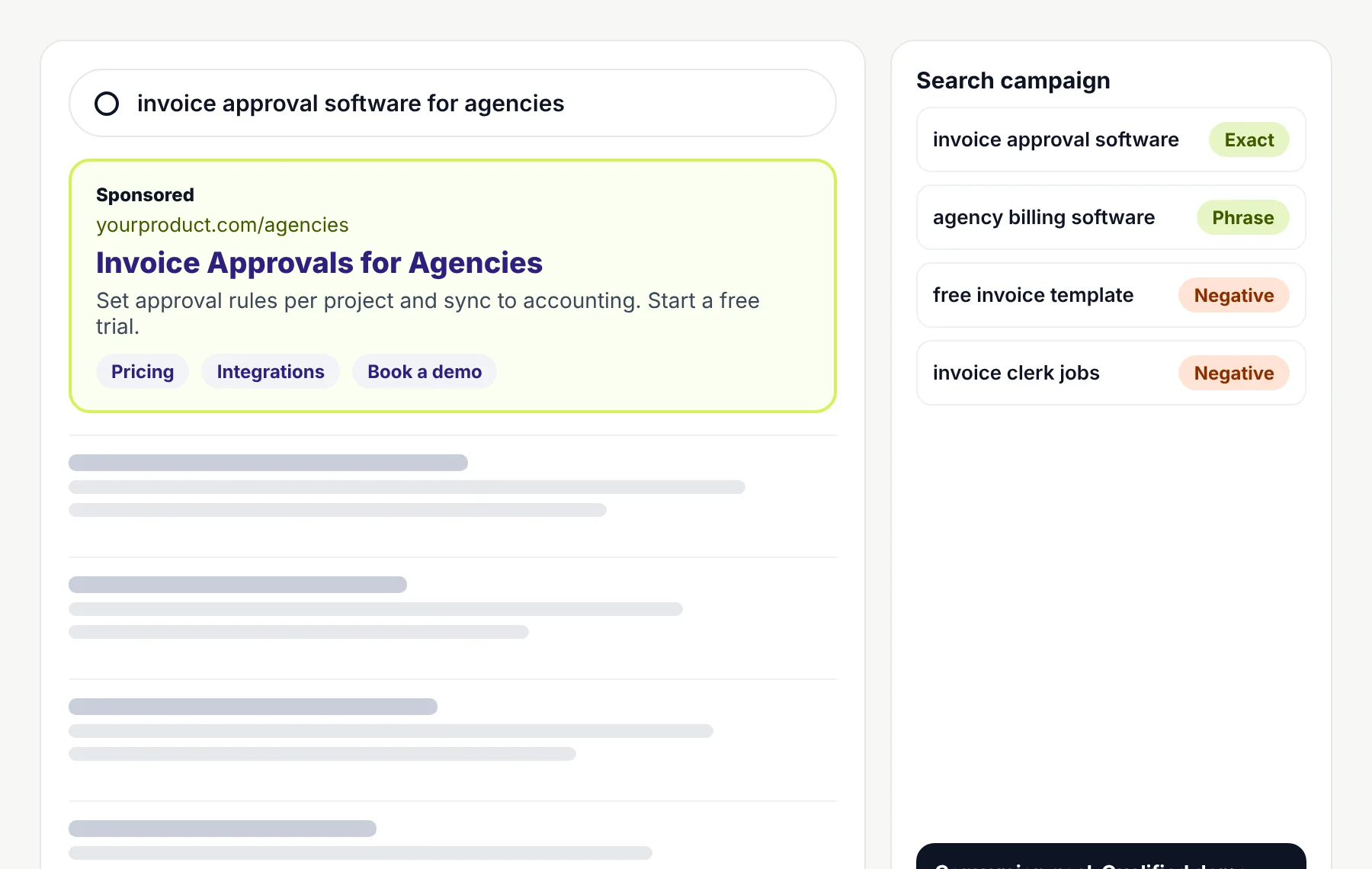
Search campaigns that reach people already looking for software like yours, built around buying intent and qualified demos or trials.
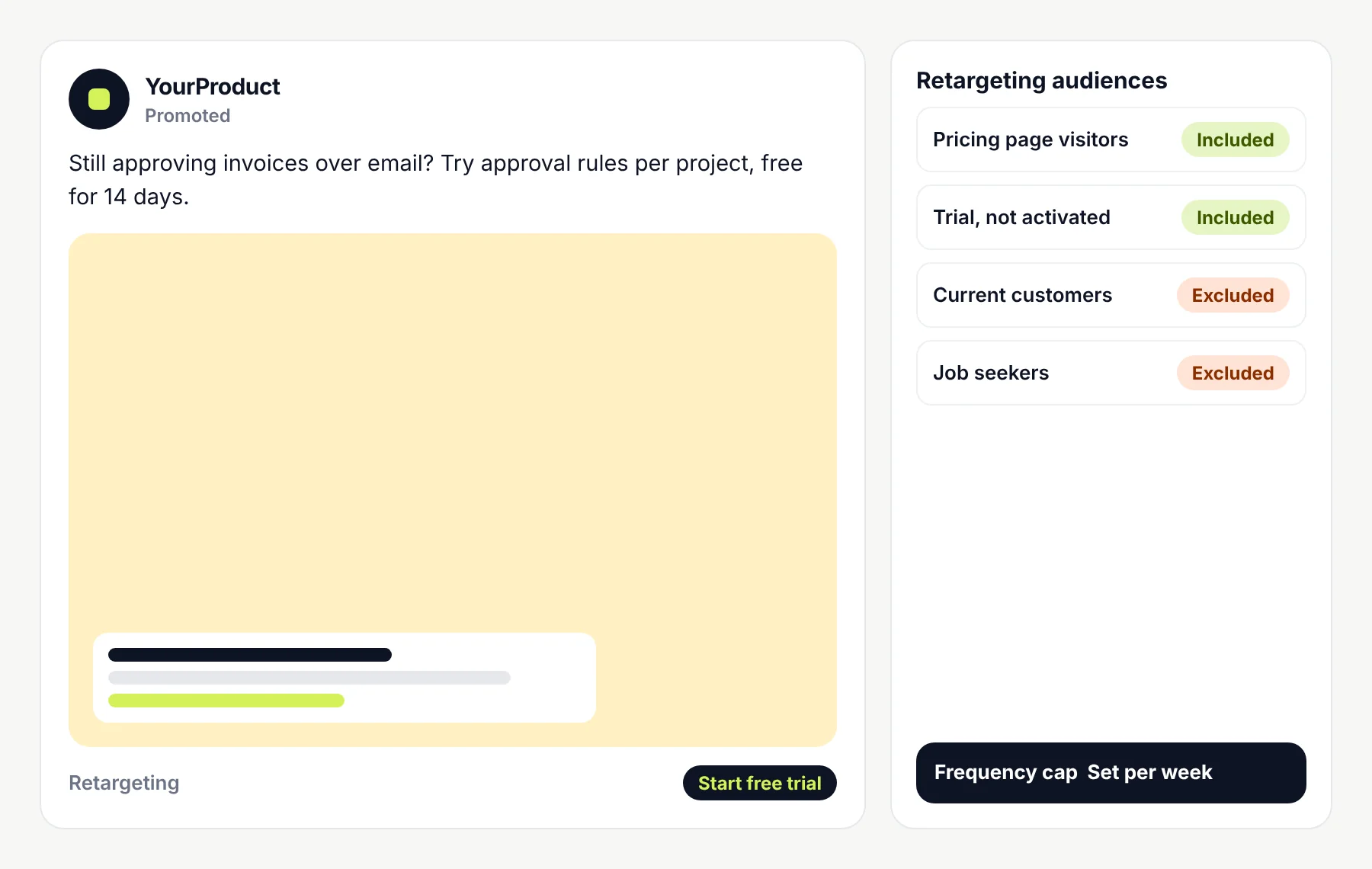
Retargeting and prospecting on social feeds, best suited to products with broad audiences or self serve sign ups.
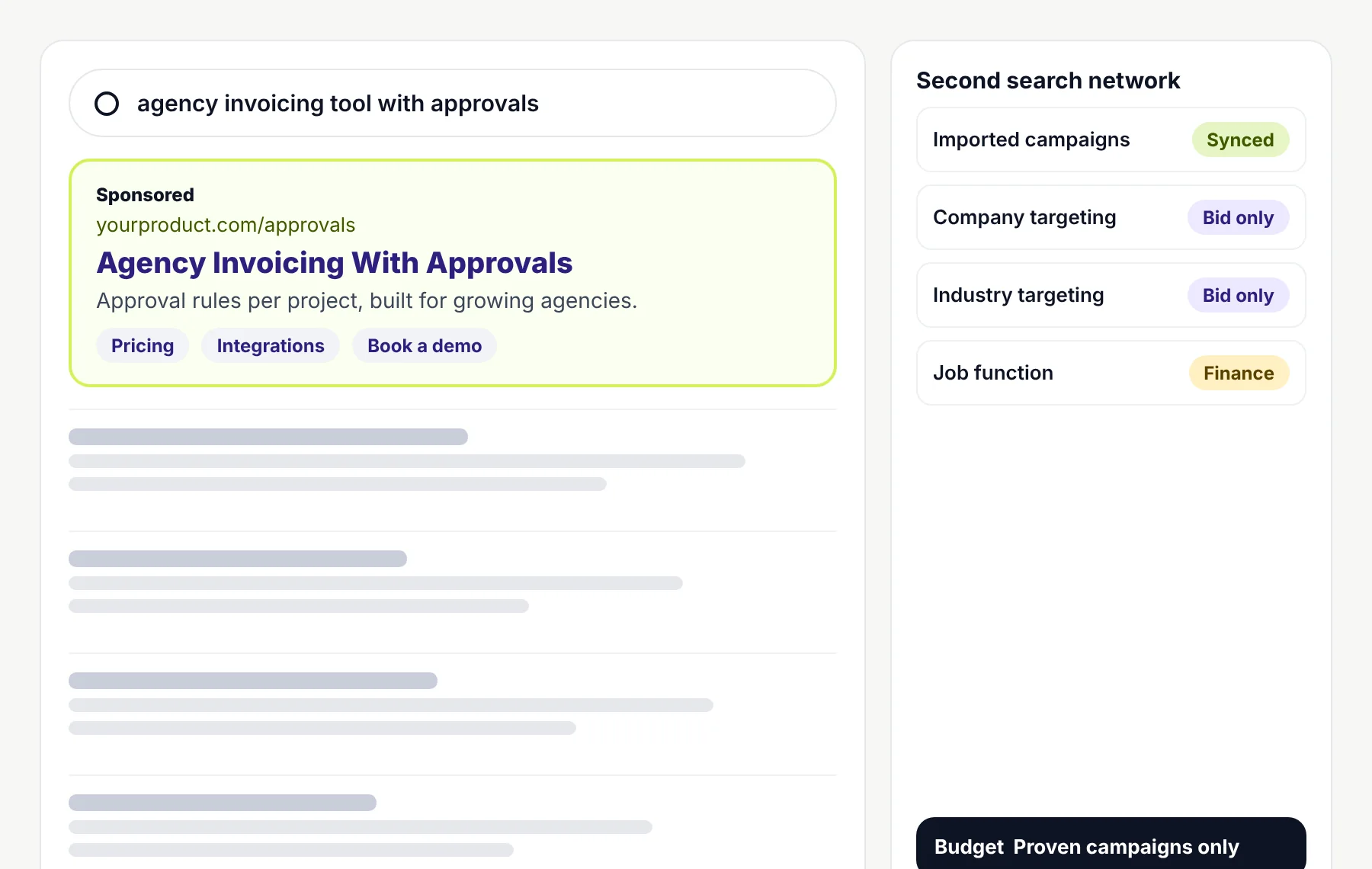
Microsoft Advertising campaigns that extend proven search campaigns, using LinkedIn profile data to adjust bids by company, industry and job function.
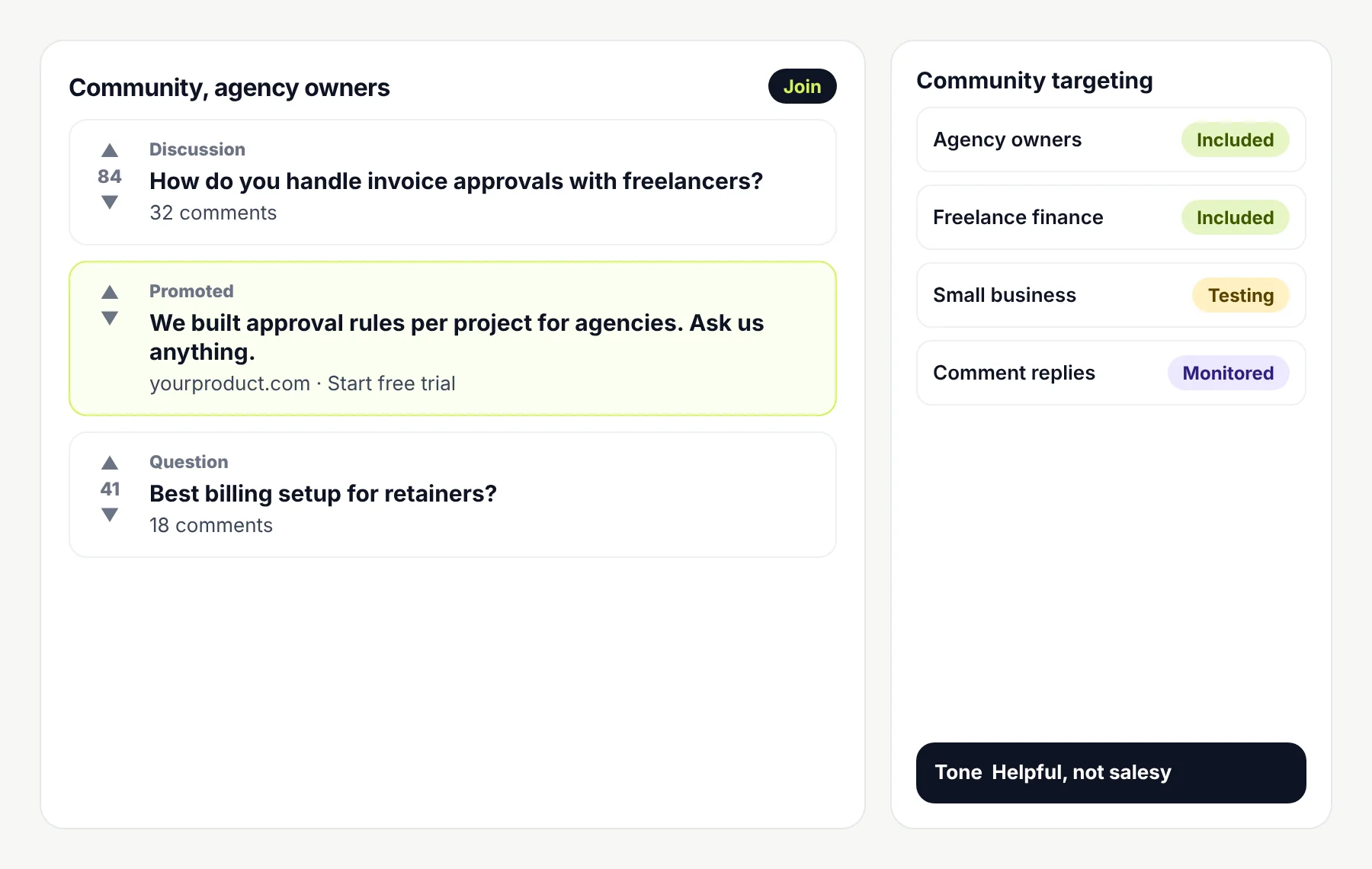
Ads in communities where your buyers already discuss their problems, for products with an engaged, specific audience.
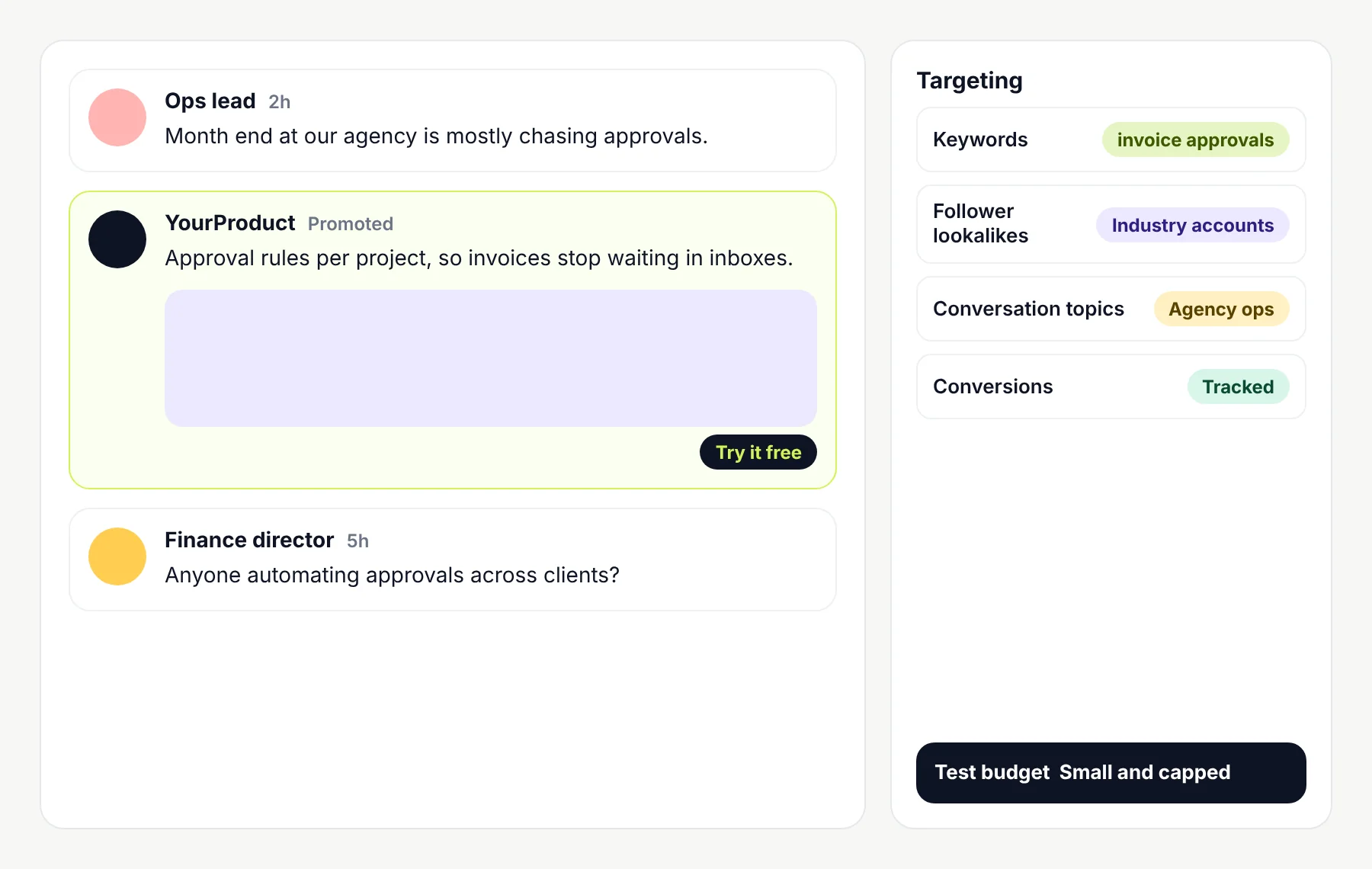
Promoted posts around the keywords, topics and conversations your buyers follow, usually run as a small, measured test first.
FAQ
Strategy, audience building, campaign setup, ad copy and creative briefs, lead gen forms, landing page reviews, retargeting, tracking, ongoing management and reporting. Your written scope sets out which parts apply.
It usually suits B2B products where buyers can be described by role and company, and where deal size supports higher costs per lead. Low priced self serve products often do better on other channels.
Qualified leads, demo requests, trials and sign ups, webinar registrations, content downloads, account based marketing and retargeting. The objective is chosen to match the goal.
We start from your customer profile and best customers, then build audiences from job, company and matched list data, sized so campaigns can deliver.
We write ad copy and creative briefs. Design and video production depend on your scope and the assets you already have.
Landing page recommendations and tracking checks are included. Page design or development, and developer heavy tracking or CRM work, are scoped separately when needed.
We agree what a qualified lead means with your sales team, then track it in your CRM where possible, rather than counting every form fill.
It depends on the offer and how leads are followed up. Forms reduce friction, landing pages give more context. We often test both.
Reports separate LinkedIn numbers from analytics and CRM results, covering spend, reach, clicks, leads, qualified leads, demos, trials and pipeline where measurable, plus next steps.
It depends on audience size, objective, markets, testing needs and your conversion path. We recommend a budget during strategy, and ad spend is always separate from our fee.
No. LinkedIn controls delivery, and results depend on your audience, offer, creative, pages and sales follow up. We commit to careful management and honest reporting.
Access to Campaign Manager and your analytics, your customer profile, brand assets, approvals for ads, and CRM access or reports if we’re measuring qualified leads.
Book a call and tell us about your product, your customer profile and what your LinkedIn campaigns do today. We’ll talk through audiences, offers and what kind of engagement makes sense.
Prefer email? Write to hello@saasassistant.com