SaaS SEO services built around sign ups and demos, not just traffic
We help SaaS companies get found by people looking for software like theirs. Keyword strategy, product and comparison pages, technical SEO, content and reporting that follows organic visitors through to trials, demo requests and pipeline, wherever your tracking allows.
Community forumWhat do agencies use for invoicing?
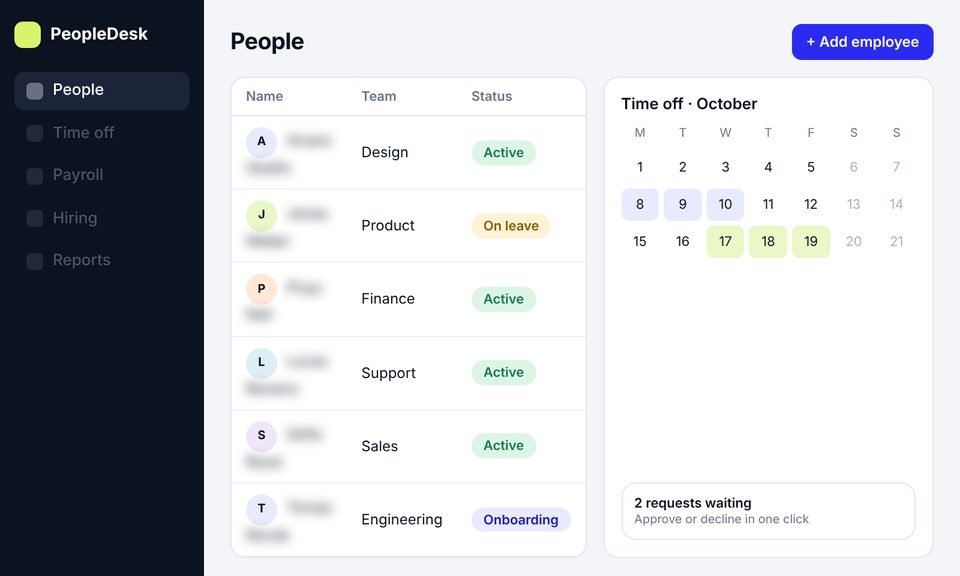
ProductPricingIntegrations
Features › InvoicingInvoicing built for agencies
Send project based invoices, get approvals and sync to accounting.
Invoices from tracked time
Approval rules by project
Accounting sync
Start free trialBook a demo
Trial started
Organic reportExample data
Non branded clicks
Trial sign ups from search
Demo requests from search
Tracked in your analytics and CRM
What SaaS SEO covers
SEO strategyKeyword and intent researchFeature and solution pagesComparison pagesTechnical SEOContentDigital PRInternational SEOReporting
Search intent
The right page for every stage of the search
SaaS buyers search differently as they move from a problem to a purchase. Traffic from the wrong stage looks good in a report and rarely becomes a customer, so every keyword is matched to a page type and a next step. Pick a stage to see an example.
why are client invoices always lateExample search
Best page type
Educational guide
What the page does
Explains the problem and how teams solve it, then introduces the product where it genuinely helps.
Next step for the visitor
Newsletter sign up or product tour
How we judge it
Engaged visits, assisted sign ups
invoice approval workflowExample search
Best page type
Use case page or in depth guide
What the page does
Shows how the workflow works, with the product as one clear way to run it.
Next step for the visitor
Product tour or free trial
How we judge it
Clicks, visits to product pages
invoice software for agenciesExample search
Best page type
Solution or industry page
What the page does
Speaks to one audience and its needs, with proof, features and pricing close at hand.
Next step for the visitor
Free trial or demo request
How we judge it
Trials and demos from search
your product vs a competitorExample search
Best page type
Comparison or alternatives page
What the page does
A fair, current comparison that helps the reader decide, including when another tool may suit them better.
Next step for the visitor
Demo request or trial
How we judge it
Conversions, sales feedback
your product pricingExample search
Best page type
Pricing, feature or integration page
What the page does
Answers the last questions clearly. These pages often need technical and on page work more than new content.
Next step for the visitor
Sign up or contact sales
How we judge it
Sign ups, qualified leads
Not every keyword deserves its own page. When two searches share the same intent, one strong page usually beats two pages competing with each other.
Why SaaS is different
What changes when the product is software
SaaS SEO uses the same search engines and the same fundamentals as any SEO. What changes is the goal, the pages that matter and how success is measured.
Typical SEOSaaS SEO
Main goalMore visitors and rankingsQualified sign ups, demos and pipeline
KeywordsBroad terms with the most searchesProblems, use cases and evaluation terms your buyers use
Key pagesBlog posts and a few service pagesFeature, solution, integration, pricing and comparison pages
Technical workSpeed and metadataRendering, large page sets, docs and app subdomains, duplicate URLs
MeasurementTraffic and positionsOrganic conversions by page, joined to your CRM where possible
Who’s involvedMarketingMarketing, product, engineering and sales
How your sales model changes the priorities
Product led
People sign up and try the product themselves.
Feature and use case pages that lead straight to sign up
Templates, tools or integration pages where they genuinely help
Tracking from organic visit to sign up and activation, where your setup allows
Sales led
Buyers research, compare and talk to sales, often as a team.
Problem and solution content for the whole buying group
Comparison and industry pages that support sales conversations
Demo requests and qualified leads tied back to search in your CRM
Hybrid
Smaller teams self serve while larger accounts talk to sales.
Pages with both a trial and a demo path
Separate content for self serve users and enterprise buyers
Reporting that splits sign ups from sales leads
What’s included
SaaS SEO services, chosen for your situation
Not every SaaS company needs every service. A new product may need strategy and core pages first, while a large site may need technical work before anything else. We agree the mix with you.
SEO strategy and roadmap
Your product, buyers and goals, the search opportunity and your competitors, turned into a prioritised plan.
Typical outputRoadmap and keyword to page map
Keyword and intent research
Problems, use cases and evaluation searches, grouped by intent so each one has the right page.
Typical outputKeyword groups with page types
Site architecture and on page SEO
Product, feature, solution, integration and pricing pages, plus titles, headings, internal links and canonicals.
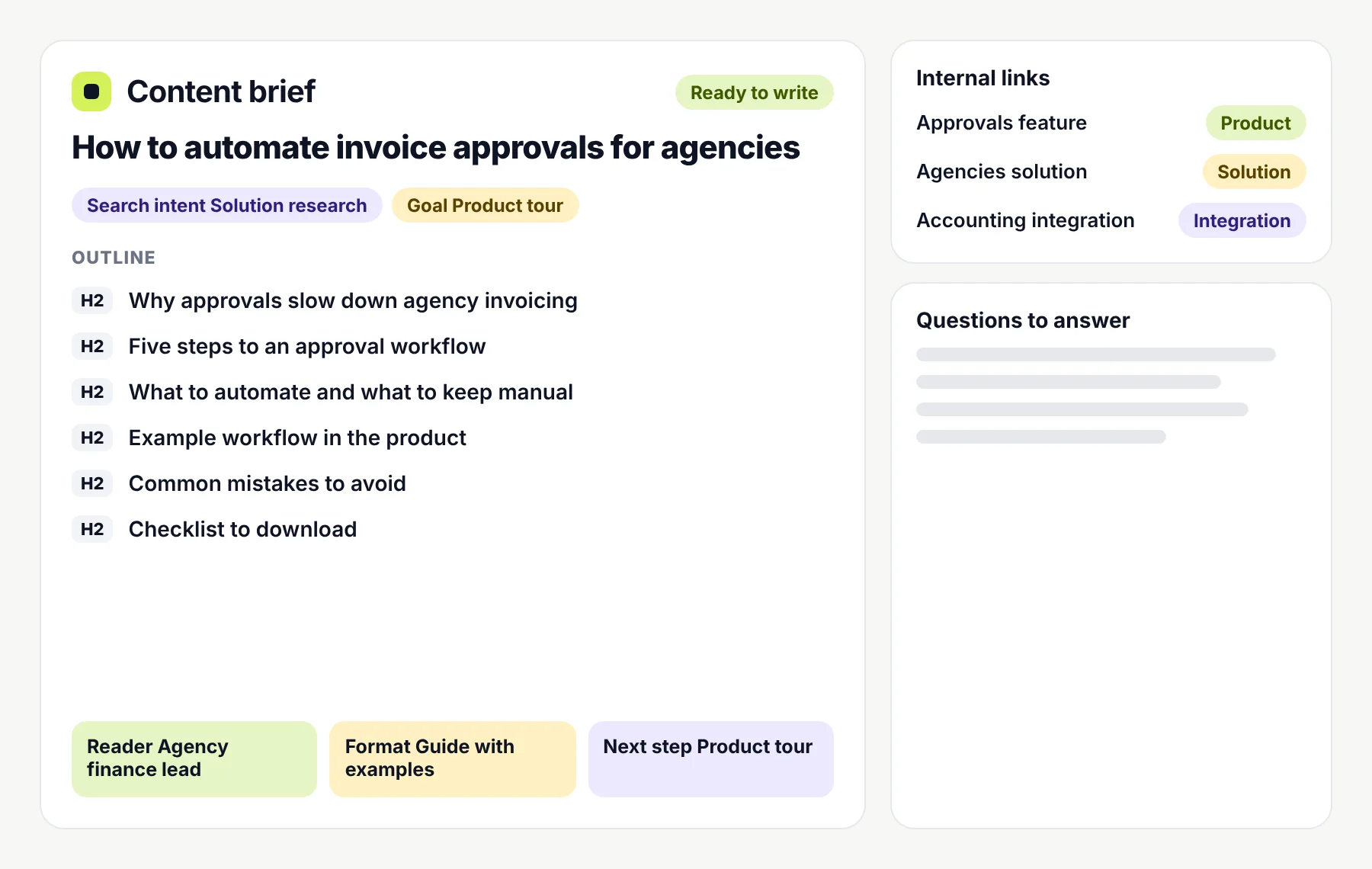
Content audits, briefs, new content and updates to pages that are close to ranking.
Typical outputContent plan and briefs
Comparison and alternative pages
Fair, accurate comparisons for buyers weighing their options, kept up to date.
Typical outputComparison pages
Digital PR and authority
Earning mentions and links from relevant publications, through useful data, expertise and stories.
Typical outputOutreach plan and earned links
International SEO
When you sell in several countries or languages, URL structure, hreflang and genuinely localised pages.
Typical outputInternational setup plan
Analytics and reporting
Search Console, analytics and conversion tracking set up so organic results can be measured properly.
Typical outputMonthly report and next steps
Site architecture
The pages SaaS buyers actually search for
A SaaS marketing site works best when each section matches a type of search. Here’s a typical structure, with an example of what each part targets.
One page, one purpose
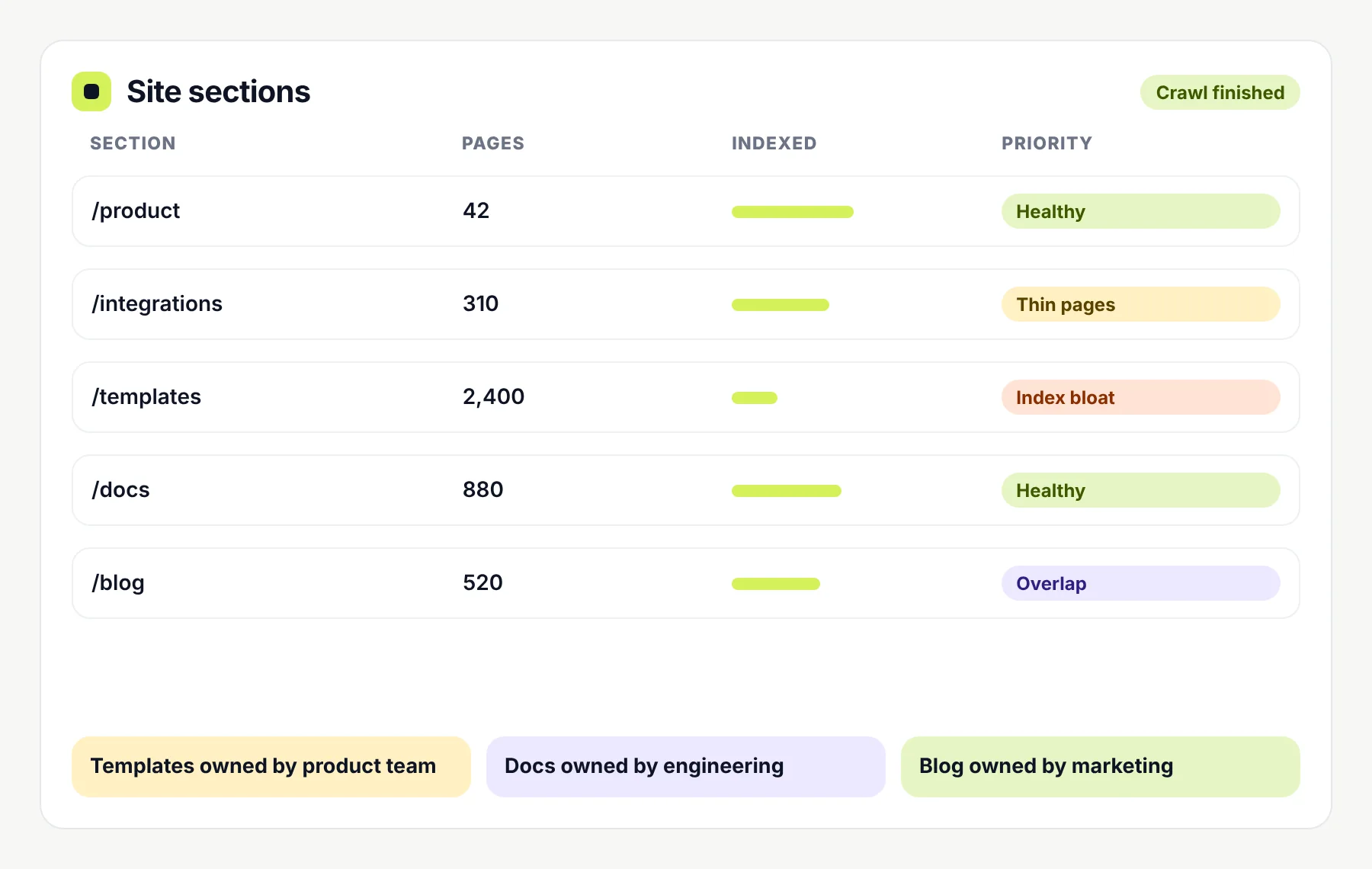
Every page answers a distinct need. Overlapping pages are merged or redirected.
No thin pages to chase keywords
Integration or industry pages are only worth creating when they say something specific and useful.
Guides link to the product
Educational content links to the commercial pages it relates to, so visitors and search engines can follow the path.
yourproduct.com
Product and featuresSearches for what the product does
/product/features/invoicing
SolutionsSearches by industry, role or use case
/solutions/agencies/solutions/approvals
IntegrationsSearches for tools that work together
/integrations/accounting
PricingSearches from buyers close to choosing
/pricing
CompareSearches comparing tools and alternatives
/compare/alternatives
ResourcesSearches about problems and how to solve them
/guides/late-payments
Comparison pages
Comparison pages buyers can trust
People comparing software are often close to a decision, so these pages can matter a lot. They only work long term if they’re honest. Not every company needs them, and we’ll tell you if yours doesn’t.
Accurate
Facts checked against the other product’s own site, with the date they were checked.
Fair
Clear about where another tool may be the better choice, and no invented weaknesses.
Useful
Compares what buyers care about, such as workflows, integrations and pricing models, not only feature ticks.
Maintained
Reviewed regularly, because competitor products and prices change.
Technical SEO
Technical SEO in plain language
SaaS sites often run on JavaScript frameworks, have thousands of similar pages, or split content across the app, docs and blog. These are the questions technical SEO answers.
Crawling
Can search engines find it?
Internal links, XML sitemaps and robots rules let search engines reach every page that matters, and skip the ones that don’t.
Rendering
Can they read it?
Pages built with JavaScript frameworks show their content and links to search engines, not just a loading screen.
Indexing
Should it be in the index?
Canonical tags and noindex rules keep duplicates, filtered URLs and thin template pages out of search results.
Redirects
Does it point to the right place?
Old and moved URLs lead to the right page in one step, so rankings aren’t lost in a redesign or migration.
Core Web Vitals
Is it fast and stable?
Loading speed, responsiveness and layout stability, measured on real devices.
Structured data
Is it clearly described?
Markup for the organisation, products, articles and FAQs where it’s accurate and allowed.
Who fixes what
We find itAudits and monitoring show what’s wrong and how much it matters.
We specify the fixClear tickets your developers can act on, with priority and expected impact.
We or your team build itOur own developers can implement fixes, or we work alongside your engineers and check the result.
Most technical fixes need someone with access to your codebase or CMS. Because we also build SaaS products, we can make many changes ourselves when you’d like us to.
Content and authority
Content and links that hold up over time
Shortcuts can bring a quick jump in traffic and then a long fall. Our approach follows Google’s spam policies, which treat mass produced pages and bought links as manipulation.
What we do
Content written for your buyers’ real questions, using your team’s expertise
Updates to existing pages before writing new ones, when that’s the better option
Integration and industry pages only when they have something specific to say
Digital PR that earns links with useful data, opinions and stories
Internal links from guides to the product pages they relate to
What we won’t do
Hundreds of near identical pages made only to target keywords
Bought links or link schemes
Comparison pages with false or outdated claims
Content that promises what the product doesn’t do
Tactics that risk a penalty for short term gains
AI search
Being found in AI answers too
More buyers now start their research with an AI summary or an assistant rather than a list of links. These answers are built from pages that are easy to understand and widely referenced, which is why the same SEO foundations matter here, with a few additions.
Where buyers meet AI answers
AI summaries in search resultsSearch engines now show an AI written overview above the usual results for many questions, with links to the pages it drew on.
AI assistantsBuyers ask chat assistants which tools to consider. Many of these assistants search the web and cite their sources.
The sources behind the answersReview sites, comparison articles and community threads are often what AI answers are built from, alongside your own site.
What we work on
Answer first pages
Key pages open with a clear, direct answer, then the detail. Easy for people to skim and for AI systems to quote accurately.
Consistent product facts
Your category, audience, features, integrations and pricing model described the same way on your site, docs and public profiles.
Structured data
Organisation, software, article and FAQ markup where it’s accurate, so machines can read what each page is about.
Crawler access
Important content renders without relying on heavy scripts, and your settings for AI crawlers are a deliberate choice, not an accident.
Presence beyond your site
Accurate listings on review sites and useful answers where your buyers ask questions, since AI answers draw on these too.
Tracking AI visibility
A set of priority questions checked across AI summaries and assistants, plus visits from AI tools measured in your analytics.
Measurement and reporting
How we measure SaaS SEO
Total organic traffic says little on its own. We report in layers, from what SEO directly controls to the business results it contributes to, and we’re clear about which is which.
1
Search visibility
What SEO directly controls
Impressions and clicks
Non branded visibility
Rankings for priority topics
Technical issues resolved
2
Page performance
What the pages do with visitors
Visits to commercial pages
Engagement on key landing pages
Clicks to sign up or demo
3
Conversions
Where tracking is set up
Trial and product sign ups
Demo and contact requests
Conversions by landing page
4
Business impact
Where your CRM attribution is reliable
Qualified leads from search
Pipeline influenced by organic
Customers who first came from search
What SEO influences
Who finds you, which pages they land on, and whether those pages answer their questions.
What also shapes the result
Your pricing, positioning, product experience, sales process and other channels. Good SEO can’t fix a weak offer, and it often works alongside other channels before someone buys.
How it works
From first audit to steady progress
You work with one lead throughout. SEO builds over months, not days, so the first stage is about getting the foundations and priorities right.
What to expect early on
A clear picture of where you stand
Quick technical fixes underway
Tracking checked, so results can be measured
A roadmap you’ve agreed with us
How fast results follow depends on your site’s starting point, competition, how quickly changes go live, and demand for what you sell.
1
Discovery
Your product, customers, sales model, goals and what’s been tried before.
Access to analytics and Search Console
2
Site and search assessment
Technical health, existing rankings, content, conversion tracking and competitors.
Audit findings
3
Keyword and intent research
Searches grouped by intent and mapped to existing or new pages.
Keyword to page map
4
Strategy and roadmap
What to do first and why, with effort and expected impact for each item.
Prioritised roadmap
5
Technical and on page work
Fixes and page improvements, made by us or handed to your developers.
Tickets or changes made
6
Content
Briefs, new pages and updates, planned with your team and reviewed by your experts.
Briefs and published content
7
Authority building
Digital PR and outreach, where it’s worth doing.
Outreach plan and earned links
8
Reporting and refinement
Monthly reports, and the next set of priorities based on what’s working.
Report and next steps
Our work
SEO results from our client projects
Two of these products started with no search presence at all. Client names are withheld, and we’re happy to talk through the details on a call.
Case 01Driving theory app
Learning app · Italy
Driving theory app
We designed and built the product and website, then grew it with advanced SEO, including AEO and GEO, and Google Ads.
The fundamentals are the same. The difference is the goal and the pages. SaaS SEO targets the searches software buyers make, from problems to comparisons, and measures success by sign ups, demos and pipeline rather than traffic alone.
Yes, when the right searches lead to pages built to convert and the tracking is in place. Results depend on demand for your product, competition and your offer, so we don’t promise specific numbers.
Yes. Product, feature, solution, integration and pricing pages are often where the most valuable searches land, so they’re usually a priority.
Yes. We can write briefs for your writers, review drafts for search, or create content ourselves, with your experts checking it for accuracy.
Yes. We specify every fix clearly, and because we also build SaaS products, our developers can implement many changes directly or work with your engineers.
By weighing the likely impact on qualified traffic and conversions against the effort needed. Technical blockers and pages close to ranking for valuable searches often come first.
Monthly, in layers. Search visibility, then page performance, then conversions where they’re tracked, and business impact where your CRM attribution is reliable.
It varies with your starting point, competition and how quickly changes go live. Early signs such as impressions and rankings usually move before sign ups and pipeline. We don’t promise timelines we can’t control.
Yes, when they suit your market. We keep them accurate, fair and up to date, and we don’t make claims about other products that we can’t support.
We earn them through digital PR and useful content. We don’t buy links or use link schemes, because they break search engine guidelines and put your site at risk.
Strong SEO foundations also help AI systems understand your product. We include that thinking in our SEO work and offer dedicated AEO and GEO services. Nobody can guarantee AI mentions or citations.
Access to Search Console and analytics, a view of your CRM or conversion data if possible, your product and positioning materials, and a contact on your team who can approve changes.
It depends on your site’s size, its technical state, how much content is needed and whether we implement changes. You get a written scope and price before work starts.
Let’s turn search into customers
Book a call and tell us about your product, your buyers and where organic search stands today. We’ll talk through the biggest opportunities and how we’d approach them.

 Figma
 Ahrefs
 Search Console
 Google Ads

 Case 01